
Bishop Steven calls for government regulation of AI in final Lords speech
Bishop Steven urged governments to regulate artificial intelligence warning of rapid technological change risks

Gospel reading: Mark 15.1-39. All across the world, women and men on every continent are walking through the events of Holy Week. We enter into the final days of Jesus of Nazareth in…

Gospel reading: Mark 15.1-39.
All across the world, women and men on every continent are walking through the events of Holy Week. We enter into the final days of Jesus of Nazareth in song and drama, in liturgy, in silence. In this reimagination the whole world finds forgiveness and healing and strength.
On Saturday evening ITV’s Big Night of Musicals featured a remarkable premiere: a performance of the song Gethsemane from Jesus Christ Superstar by Sam Ryder who will play the part of Jesus in the West End revival of the show this summer. 10,000 people listened to the song’s exposition of Jesus humanity and agony in the garden:
I only want to say, if there is a way, take this cup away from me for I don’t want to taste its poison, feel it burn me. I have changed. I’m not as sure as when we started.
Mark’s gospel has been described as a passion narrative with a long introduction. In two long chapters,119 verses Mark walks us through each event in the final days of Jesus life: the plot; the anointing; the Passover; the institution. The garden; the arrest; the courtyard and the denial; the trial. In our reading this evening we move from Pilate to the crowds; to the soldiers; to the place of the skull. From the earliest days of the Church, from earliest gospel, every part of the story is curated for reflection, to help each of us walk ourselves in the way of the cross and find our place in this most solemn and beautiful of stories.
Every detail is important in this retelling. But why? Because all of life is here. The story of one man’s death is told as a universal story, applied to all humanity, to all creation. For this reason every single detail matters and is passed on and is retold across the generations. We are there when they crucify our Lord.
The whole world is present in the story represented by the Romans and the Jews, by Simon of Cyrene, by the crowds, the scribes, the soldiers. Every part of the social spectrum, each race, each generation is present.
The past is present in the story. We are reminded over and again that Jesus is the king of Jews from Pilate’s taunts to the sign above the cross. The title takes us back through the long line of Israel’s kings, to the glory of Solomon and David. Elijah is present echoing Israel’s prophets. The High Priests and the temple remind us of the sacrificial system, which is about to become obsolete. The scribes are the interpreters of Torah, although according to Mark, they cannot see. The elders hold the wisdom of God’s people, even though they have become as fools.
The one who is silent in the story is indeed the anointed one, the coming king. He is both the lamb for the offering and the great High Priest. He is the one whose life interprets and fulfils the law and the prophets. He holds the wisdom of the ages and of all the nations.
The darkness of the human heart is here. Politics and scheming. Trickery, power plays and deception. The self interest, emptiness and cruelty of Pilate. The envy of the crowds. The savage mockery of a whole cohort of soldiers as they strip him and spit on him. The racism just below the surface of the story. The spareness of the narrative lays bare the human condition and the remedy.
The detail of the story offers us material for a lifetime of reflection on the nature of God. The Trinity in Jesus’ cry of desolation in the echo of Psalm 22. Christology explored through irony: Will ye that I release unto you the king of the Jews? Christology in Christ’s humanity and silence, in his demonstration of the way the Son of God exercises power and overcomes evil.
And the story explores through multiple, detailed images, the story and reality of salvation. The purple and the crown of thorns become symbols of Christ’s kingship. Christ, who has done no wrong, dies in place of a murderer, Barabbas, as Christ dies in the place of each of us. Simon shoulders the cross for Jesus, as each of us is called to share Christ’s suffering. The resurrection is in view in the prophecy of the rebuilding of the temple. The veil of the temple is torn in two, the stone wall which separates the Holy of Holies from the outer courts.
And finally there is the response of faith, the good confession from the one who is witness to everything. The mighty confession of the centurion, the high point of the story and perhaps of the gospel itself. The response each of us is invited to echo in our hearts in faith and wonder. Truly this man was the Son of God.
There is so much to explore even in the sparse economy of Mark. And what is all of this for. Why are we encouraged to draw near and listen.
The attention of the world is focussed still on empty politics, on envy and violence, on power plays, on needless cruelty, on the clash of faiths and cultures, on the raging of the nations.
As we draw near and listen, we rediscover all of the agony and cruelty we see in the world around us in the the narrative of Jesus death. But we are able to see beyond the vanity and violence to the person who stands at the centre of the story, who is largely silent, who by his goodness and his suffering offers his life for the sins of the whole world.
We find Jesus in this present darkness and we find the light shines still through death and resurrection. And we and all the world find in this moment immeasurable faith and hope and love to seek this salvation and this Saviour and to live lives of depth and meaning and holiness and truth. We say again with the centurion, with the saints down the ages and with God’s people all across our broken world:
Truly this man is the Son of God
Bishop Steven urged governments to regulate artificial intelligence warning of rapid technological change risks
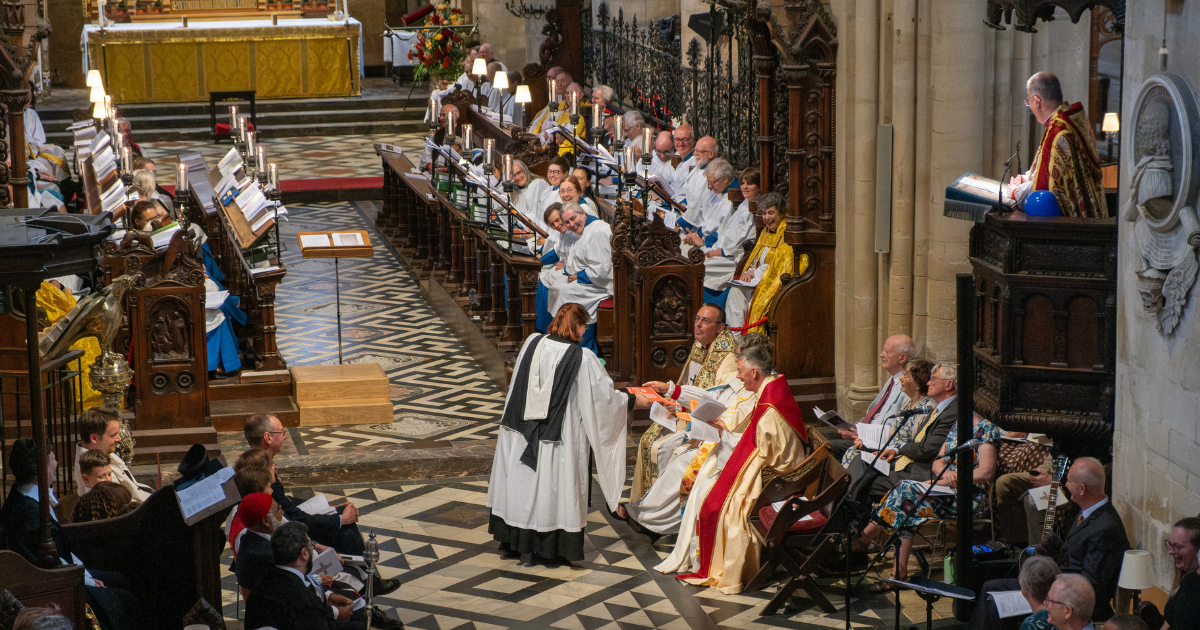
Full photo gallery from Bishop Steven’s farewell service. Clergy, church leaders and communities from across Berkshire, Buckinghamshire and Oxfordshire gathered on Trinity…
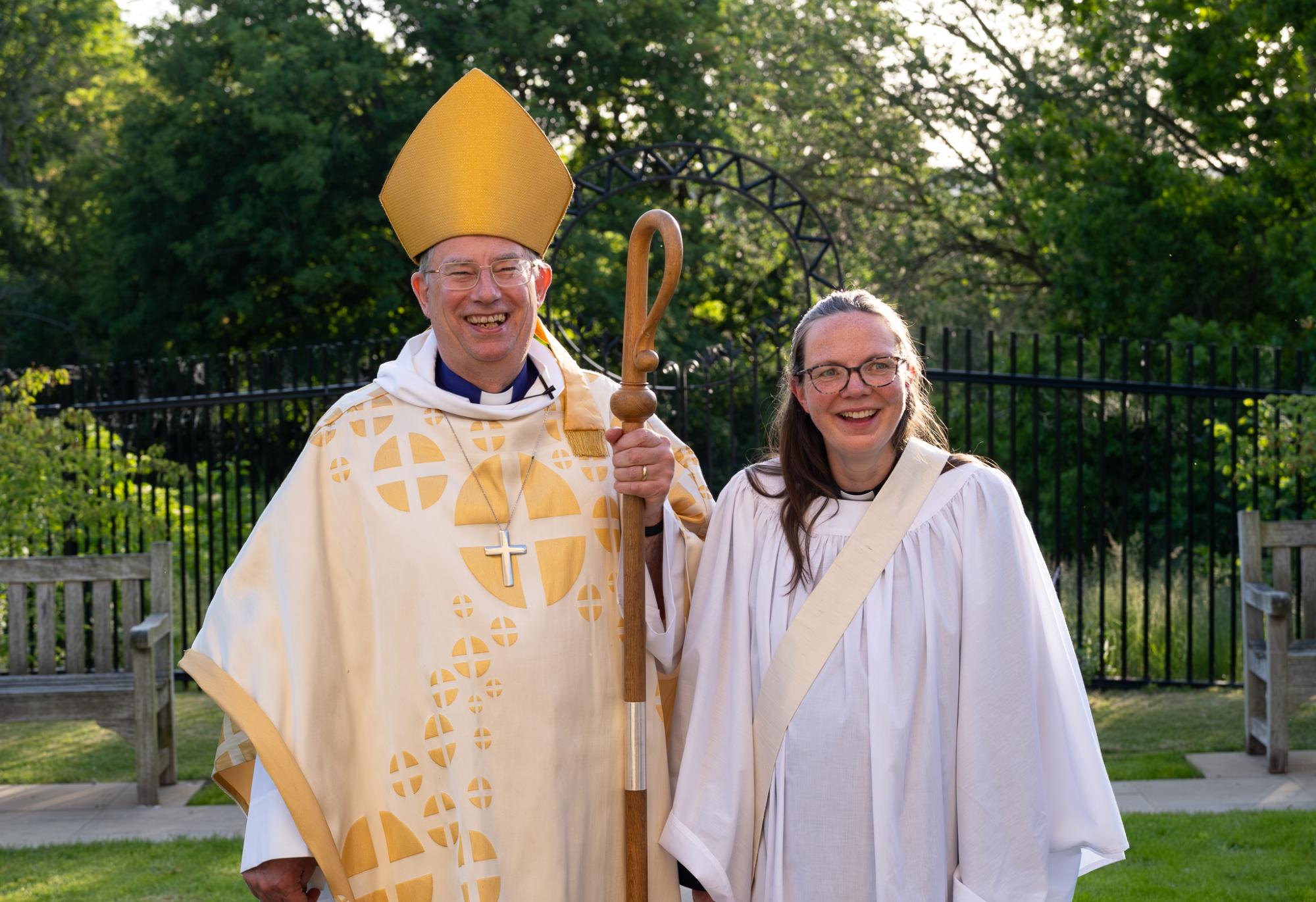
Revd Jane Barlow was ordained deacon on Pentecost Sunday at St Mary’s Church, Iffley. The special service was led by…
As faith and civic leaders in Oxfordshire and the Thames Valley we were very disturbed and saddened to learn that…
As The Rt Revd Dr Steven Croft prepares to lay down his ministry as Bishop of Oxford later this year,…
A statement from the Oxfordshire Faith and Civic Leaders Group and the Thames Valley Faith and Civic Leaders Group On…
More than 100 Christian leaders have signed an open letter raising concerns about climate misinformation on GB News. The letter…
Significant progress has been made in the process to identify the next Bishop of Oxford. We have created and published…

Diocesan Synod were blessed by the presence and contributions of young people from across the diocese in their first meeting…
On 21 March at 6pm two of Oxford’s most influential leaders, Professor Irene Tracey, Vice-Chancellor of Oxford University, and The Rt Revd Dr…