
Drawing on responses from over 80% of parishes, the 2026 Articles of Enquiry offer a rich picture of church life across the Diocese of Oxford.
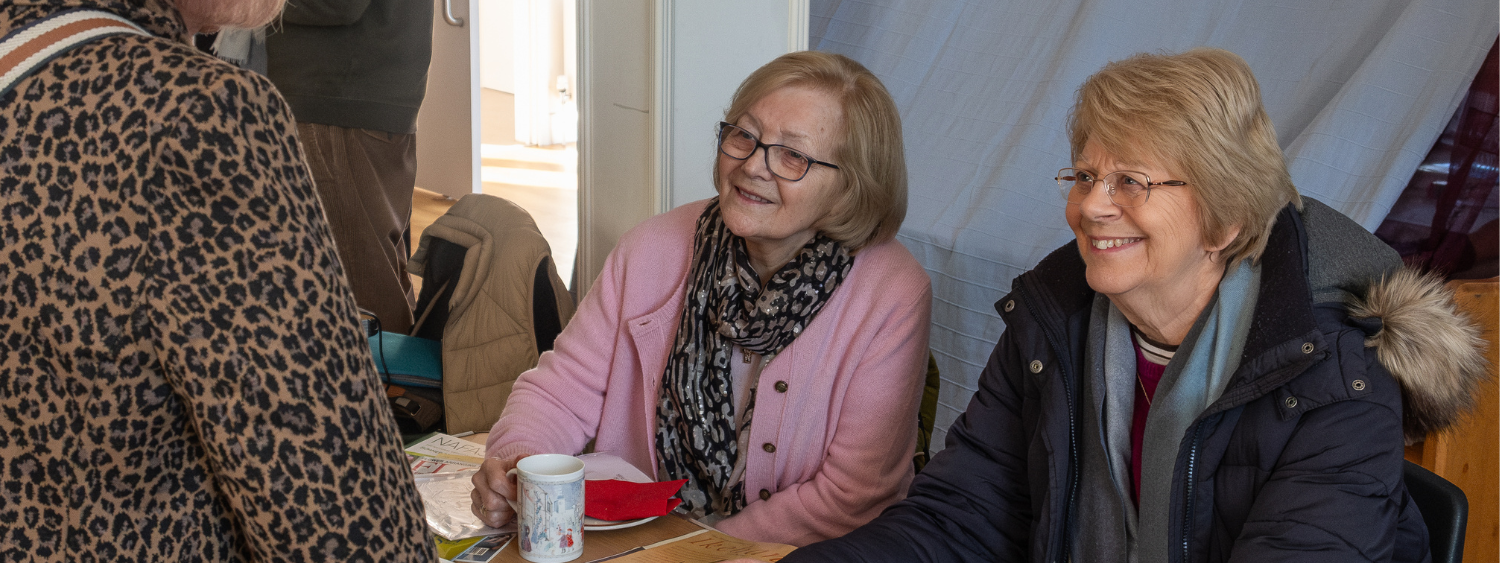
“Our Community Cafe really came into its own in 2025, seeing people who previously vowed to “never step foot in a church again” call it “home”. People of all ages really being community; caring for each other, looking out for one another, and rejoicing in being together. It has been a real highlight to be able to provide a space and volunteers to run this community cafe, alongside other community groups, to provide a place where everyone belongs.”
Introduction
For several years, Archdeacons in the diocese have collected information from parishes using the Articles of Enquiry (AoE) hosted on the online Parish Return System. At the closing date 82% of parishes had submitted their return, matching the rate in 2024 which was the highest return rate since AoE collection began.
For 2026, the Enquiry covered six key themes.
Discipleship
“Through Alpha, we have welcomed several people into the church community. Many attended the course exploring questions of faith, came to believe in Jesus, and chose to make this church their home. They have since joined weekly Connect Groups to continue growing in faith and building relationships.”
Churches offered a wide range of opportunities to help their congregation grow in their faith. Overall, 63% of churches offered a Lent course, with 45% offering Bible study groups and 38% offering regular house groups. 27% offered other opportunities and 26% offered an Advent course. One in five churches, however, offered none of these opportunities.
More urban churches offered these opportunities (81%) than rural churches (49%). 88% of the largest churches said they had offered opportunities to help their congregation grow in faith, compared with 31% of the smallest churches.
The Learning Hub is two years old, and the team wanted to understand how aware churches are of it and how far people are engaging with its resources. Overall, 64% of churches said they were aware of the learning hub. 20% were aware of the hub and of an individual or group within their church or parish who had used it, and 43% were aware of the learning hub but not of any individual or group who had used it.
Children and young people
Questions were asked to help monitor the diocese’s priority area to increase the number of children and young people joining worship in our churches.
Churches were asked about resources used in their work with children and young people; the most popular resources were Open the Book used by 16% of churches, and Scripture Union resources used by 14%. However, 45% of churches said they used none of the resources listed or other resources. Not surprisingly, 84% of the churches that said they did not use any resources in their work with children and young people had fewer than 5 children on average attending. However, there were churches with on average over 20 children attending who said they did not use any resources.
Poverty and social justice
Parishes were asked whether their church offered money support, debt advice, or a hardship fund. Overall, just over one quarter (26%) of all parishes offered some form of hardship support, but this varied by rurality being 19% in rural areas and 45% in urban areas. Usually this was a hardship or discretionary fund, often held by the vicar. Several mentioned working with Christians Against Poverty (CAP).
Parishes were asked whether during the past year their church had had conversations about the Living in Love and Faith (LLF) process and Prayers of Love and Faith (PLF). One third of churches had had conversations in their PCC meetings, and one quarter in their leadership team meetings. However, for almost 40% of churches these subjects had not been a feature of any conversations, and 11% of churches were not aware of these issues.
Environment
“Our annual Eco-Festival gaining strength and commitment. This year we had a range of speakers on a wide variety of environmental topics.”
There are grants available for net zero/energy related work, but these grants are usually only open to buildings or charities that have a high level of community use or community benefit. The team wanted to target information about those grants to the right churches, and to identify which churches are open for a substantial amount of community use, helping vulnerable people and the wider community not just their church community. They also want to use other funds wisely, so by knowing which churches could access these grants, they could direct their very limited resource to other churches that need it.
On average 90% of churches own the buildings they use for worship but this varies from 93% in Oxford to 72% in Dorchester. Of the buildings that are owned, on average 72% are used for activities aimed at the community. Rural churches are open for an average of 4.5 hours a week, with 2.1 hours of activities run by the church for the community and 2.4 hours of activities run by the community groups. In an urban setting churches are used far more for community activities; a total of 27.4 hours a week with 10.9 hours of activities run by the church and 16.5 hours of activities run by community groups.
Communications
“We have two large WhatsApp groups, both committed to prayer. One is prayer for people in need and the other is prayer for our rebuilding project.”
The Communications team wanted to understand how best to support parish websites, social media and digital communications. Facebook is the most popular social media, used by 72% of churches, followed by Facebook Groups used by 50% of churches. Instagram is used by fewer churches and mainly by those in Oxford. One third of the largest churches have a separate webpage, a Facebook page and use A Church Near You (ACNY), whereas one quarter of the smallest churches use ACNY only and almost one in five have no web presence.
Around 70% of the largest churches in all archdeaconries except Oxford said they used church software, compared to fewer than 20% of the smallest churches.
Mission
Churches were asked to tell us about the highlight of 2025 for their church and about anything that successfully attracted new people to their church or to their activities. The responses from churches gave rich information about the many ways their worship and outreach to their communities bring people into our churches.
The strongest theme emerging from the comments about the highlight for their church in 2025 was about the worship offered by churches. Nearly 60% of churches highlighted services or festivals, especially Christmas, carol services, Easter, and harvest. Some mentioned aspects of the spiritual life of their church for example, alpha courses, confirmation, baptisms and people coming to faith.
The next strongest theme emerging from the highlights was about relationship and how churches connect beyond traditional worship through community engagement (29%), and children/families (29%). Churches mentioned community cafes, meals, and social events. Churches also mentioned a growth in families attending or children’s participation, often through toddler groups, messy church and youth groups.