Jump to: Responsibilities | Area | Mission | Area team | Role & further info | Back to general information
The next bishop will share in the leadership of the Church of England as part of the College of Bishops according to their gifts but mindful of the need to focus primarily on ministry locally.
Two parishes in the Area have passed resolutions under the Women Priests and Bishops Measure and are under the oversight of the Bishop of Oswestry. Two further parishes of a complementarian evangelical theology are under the oversight of the Bishop of Ebbsfleet.
In this appointment, and that of the Bishop of Buckingham, we are consciously seeking diversity in our episcopal team in terms of gender, race, disability and the differing theological positions on Living in Love and Faith and Prayers of Love and Faith.
The diocese is committed to upholding the Five Guiding Principles as set out in the House of Bishops’ Declaration on the Ministry of Priests and Bishops, and to promote the flourishing of churches across the range of the theological breadth of the Church of England. The next Bishop of Reading will play a vital role in achieving this in their episcopal area and across the diocese.
Summary of key challenges
We are seeking a new Bishop of Reading who will be able to:
- Be a convincing advocate for the gospel in a diverse and changing culture;
- Continue to be an ambassador for the Church of England when engaging in the civic and community life of Berkshire;
- Offer warm and nurturing pastoral care to all clergy in the Area;
- Maintain high levels of personal and pastoral engagement with clergy and congregations, schools and chaplaincies;
- Continue to support the Church across the Area in both rural and urban areas in a way which seeks to be contemplative, compassionate and courageous;
- Lead the implementation of our common vision within the Reading Area Team and engagement in the Area and diocese with children, young people and families;
- Lead for the Diocese of Oxford on the environment and world mission;
- Play a wider role in both Church and society according to his or her gifts and experience.
Jump to: Responsibilities | Area | Mission | Area team | Role & further info | Back to general information
Responsibilities
The diocese is currently developing a major new strategy for ministry with children, young people and families, launched at our Diocesan Synod in March, 2024. Every parish and deanery has been invited to prepare plans by the end of 2024, and the strategy will be supported by a second bid for major national funding.
This priority is widely owned and recognised across every part of the diocese, and the Bishop of Reading will lead and encourage this initiative across the Reading Episcopal Area.
We are committed to promoting the welfare of the children, young people and vulnerable adults and protecting them from harm. As all leaders in the diocese, the Bishop of Reading will work in developing a culture where safeguarding is regarded as the responsibility of the whole church, and at the heart of our mission; they will exercise responsibility for promoting a safer Church in the Reading Area, ensuring pastoral care of survivors, and be coherent with the safeguarding policies and practice guidance of the Church of England whilst actively engaging in continuous learning in this area.
We envisage that the new Bishop of Reading will carry a similar portfolio to Bishop Olivia in terms of leading the work of the Diocese of Oxford on the environment and creation care and also our engagement with world mission, chairing the relevant committees and developing expertise in these areas.
The diocese has four key diocesan links: Kimberley and Kuruman in South Africa (part of the Anglican Province of Southern Africa), Nandyal in the Church of South India, Växjö, a diocese in the Lutheran Church of Sweden, and a new link with the Diocese of Jamaica and the Cayman Islands, formed in 2024.
Together with their senior colleagues, the Bishop of Reading will contribute to strengthening and promotion of these links, investing in the relationships of friendship and prayer which help sustain them, whilst being prepared to travel to visit these links.
A number of mission agencies and their personnel have their UK headquarters in the diocese, including Church Mission Society, Bible Reading Fellowship, World Vision and Wycliffe Bible Translators. The Bishop of Oxford is co-chair of the Anglican Communion Science Commission, which has a small team in the University of Oxford.
The diocese has made significant steps forward in racial justice and encouraging UKME Anglicans in recent years, as well as in disability awareness. We have a recently appointed team of Bishop’s Advisers in Women’s Ministry.
Jump to: Responsibilities | Area | Mission | Area team | Role & further info | Back to general information
The Episcopal Area
Location
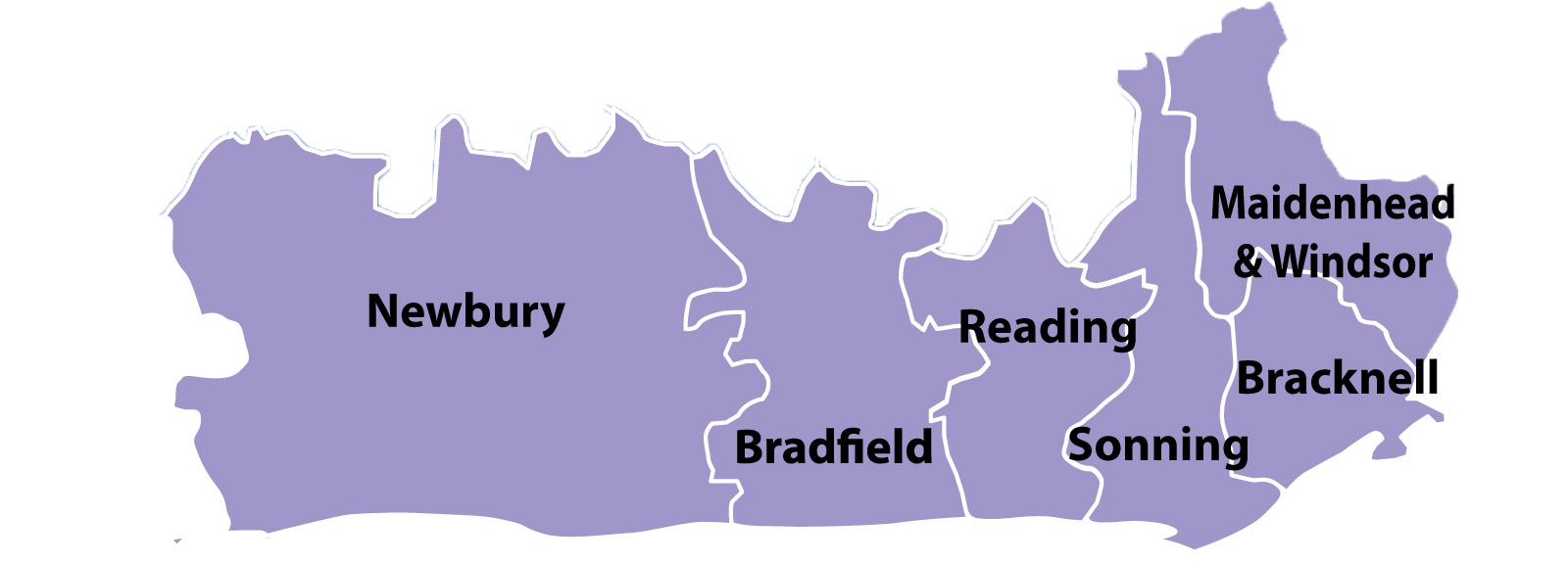 The Reading Area consists of most of the Royal County of Berkshire (Slough remains part of the Buckingham Area).
Berkshire is one of the wealthiest counties in the British Isles, and yet there are significant areas of social and economic deprivation, some of it hidden amidst signs of apparent prosperity.
There are employment opportunities in hi-tech companies which, combined with good transport links, enables an international focus. There are many dormitory communities. Civic institutions are strong, and Berkshire is the principal home of the monarch outside of London. The M4 motorway serves as a convenient artery that connects all the deaneries.
The population served by the Berkshire Archdeaconry is around 773,989. The Area is divided into six deaneries. There are 81 benefices, 127 parishes and 176 churches. The combined electoral roll is 12,369.
The Area is balanced between rural and urban parishes, uniquely so compared to the diocese as a whole.
Each deanery has a distinct character in terms of population density, relative wealth, clergy numbers, ecclesiological mix, and missional context.
The relatively small number of deaneries enables efficient communication and sensibly-sized working groups. This, combined with a very good road network, enables a high-touch, responsive relationship between the Area Team and the deaneries/parishes.
Five of the six Berkshire unitary authorities are found within the Reading Episcopal Area: Windsor & Maidenhead, Bracknell Forest, Wokingham, Reading, and West Berkshire. This results in only one layer of government above the local town or parish councils. These councils deal with delivering the whole range of local government services from refuse collection to Social Services, and each has significant offices.
The River Thames acts as a major divide between Berkshire and Buckinghamshire. To the north of Newbury are the Berkshire Downs, which are part of a range of hills that to the east in Buckinghamshire become the Chilterns.
East Berkshire is in London’s shadow with access to the capital improved since Crossrail became operational as far as Reading.
West Berkshire is more rural, and the M4 corridor is the UK’s ‘Silicon Valley’, with companies such as Vodafone in Newbury, Oracle in Reading, Hewlett Packard and many other computer firms in Bracknell.
Jump to: Responsibilities | Area | Mission | Area team | Role & further info | Back to general information
Ministry in Berkshire
 There are currently 94 stipendiary ministers and 19 stipendiary curates in training. There are nine house for duty clergy and 23 self-supporting ministers across the Area, with 27 Licensed Lay Ministers (Readers) and around 100 clergy with Permission to Officiate (not all of whom are retired clergy). The Area has 14 hospital and school chaplains.
We want every minister across the diocese to flourish in their ministry. Further support is offered through the diocese’s Employee Assistance Programme.
The diocese is committed to upholding the Five Guiding Principles as set out in the House of Bishops’ Declaration on the Ministry of Priests and Bishops and to promote the flourishing of churches across the range of the theological breadth of the Church of England.
Two parishes have petitioned for pastoral and sacramental care from the Bishop of Oswestry. Two parishes have passed a resolution on complementarian teaching on grounds rooted in a conservative evangelical theology. They currently receive pastoral support from the Bishop of Ebbsfleet. Both are Honorary Assistant Bishops in the diocese.
There are diverse religious and ethnic communities in the Reading Area, mostly settled around the urban conurbations of Reading and Bracknell. Interfaith and intercultural relationships are actively prioritised and are flourishing.
The University of Reading is well established and is a renowned centre for research in climate change.
The Oxford Diocesan Board of Education plays a significant role in education across the diocese. There are 27 church aided schools in the Area, with 29 voluntary controlled schools and 24 academies, including the new Equinox Multi-Academy Trust.
Additionally, there are many independent schools, several of which have regular confirmations. A team of school advisers works closely with headteachers, incumbents and in partnership with the local government to ensure that children and young people are given the opportunity to flourish.
For further information on our schools, please visit:
The Archdeaconry is well served by the NHS, with major hospitals in Reading’s Royal Berkshire Hospital, and other sites in Ascot, Windsor, Bracknell and Maidenhead.
West Berkshire Community Hospital in Thatcham has a minor injuries unit, rehabilitation and palliative care beds. Wokingham has a community hospital for rehabilitation and palliative care. There are palliative care and hospice services at the Duchess of Kent Hospital in Reading and the Thames Valley Hospice in Windsor. Prospect Park Hospital in West Reading is the main site for people in Berkshire with mental health conditions.
There are several private hospitals in the area, including a medium secure psychiatric unit at Thornford Park near Thatcham. Broadmoor High Security Psychiatric Hospital is located in Crowthorne, in Bracknell Forest, and houses about 240 male patients.
There is a garrison in Windsor from which troops set off to change the guard at Windsor Castle. Denison Barracks in Hermitage is home to the 73rd Military Intelligence Company, who are responsible for information gathering and intelligence analysis. The Royal Military Academy, where all officers in the British Army are trained, is at Sandhurst. RAF Welford, north of Newbury, is currently used as a munition’s depot by the United States Air Force.
In Aldermaston, between Reading and Newbury, is the Atomic Weapons Establishment. Although not as large as it once was, this is still a significant employer for the area.
Berkshire is one of the wealthiest counties in the British Isles. By and large, people have chosen to live here for many reasons, largely because of:
- employment opportunities in ‘Silicon Valley’;
- the proximity to London and road and rail links with the rest of the country;
- good independent and state schools;
- many of the villages are beautiful and unspoilt.
However, there is much need in Berkshire - data from the Berkshire Community Foundation Vital Signs survey shows significant areas of real social and economic deprivation, some of it ‘hidden’ amidst signs of apparent prosperity. Inequality is a key issue for Berkshire, with data on average incomes masking significant pockets of poverty and food insecurity. There are six neighbourhoods in Reading with child poverty rates of 40-50%, and three with pensioner poverty rates in excess of 50%.
As a result of national policies around immigration, Berkshire has become home to many thousands of newly arrived people from Hong Kong - Reading is in the top ten of local authorities accommodating Hong Kong communities. In addition, Berkshire has offered hospitality through the government's Homes for Ukraine scheme and seen the arrival of many Ukrainians seeking refuge across the county.
The use of hotels across Berkshire to temporarily house people seeking asylum has also led to a shift in the demographic of local communities, which have grown in diversity. House prices across Berkshire have increased by an average of 35% in the last ten years. A number of reports describe the impact on vulnerable groups living in sub-standard rented accommodation. Funding to civil society organisations has been significantly cut and many local groups have seen their funding reduced. Social isolation is a considerable and growing concern, affecting all age groups.
The population of Berkshire is growing rapidly, with new housing developments springing up on brown- and greenfield sites. These range from a few houses on the edge of a village to significant developments in Thatcham and Arborfield Green.
Jump to: Responsibilities | Area | Mission | Area team | Role & further info | Back to general information
Teamworking
The Area Team consists of the Bishop of Reading, the Archdeacon and Associate Archdeacon of Berkshire, the Area Director of Ordinands, the Parish Development Advisor, the Discipleship Enabler, and the Area Safeguarding Advisor. The Area Team is facilitated by excellent administrative support, including includes four full- and part-time PA roles.
The Area Team meets regularly with the six Area Deans and with Lay Chairs in Area-wide meetings and in deanery-focused meetings.
The opening of the newly built Berkshire Area Office in September 2022 has had a transformative effect by bringing the bishop’s and archdeacons’ teams together in one place and by providing a geographical point of focus for the Area.
Delivering the strategy
The Berkshire Area Team’s priorities are aligned with the common vision of the diocese. The team focuses on the transition points between centrally-provided resources and local (deanery and parish) engagement with those resources in order to build towards greater impact as a Christ-like Church for the sake of God’s world.
The Area Team aims to monitor, encourage, reward, and build momentum in the following focus areas:
| We want to see greater impact in the way that… | ... by being attentive to... | |
| Children, young people, and families (CYPF) |
|
|
| Environmental action |
|
|
| Addressing poverty and inequality |
|
|
| Everyday faith |
|
|
| New congregations |
|
|
Jump to: Responsibilities | Area | Mission | Area team | Role & further info | Back to general information
Role description and person specification
The role description and person specification is available here.
Further information
Timetable
| Deadline for expressions of interest | 25 July 2024 |
| Candidates informed of outcome of shortlisting | 5 September 2024 |
| Engagement with selection activities including informal video-calls with Archdeacon |
during September 2024 |
| One-to-one meeting with Bishop of Oxford | 30 September or 1 October 2024 |
| Meet with supplementary panels | 2 October 2024 |
| Panel interview | 3 October 2024 |
Appendix 1
The nominated candidate will need to have the right to live and work in the United Kingdom. They will need to complete an Enhanced DBS check and a pre-appointment occupational health clearance.
Experience of your competence in managing safeguarding forms a key part of the discernment process, as well as enquiries to reassure the appointing panel that you are not a safeguarding risk.
You will be asked to complete a confidential declaration and your bishop will provide a Clergy Current Status Letter (CCSL), prior to interview, having examined your blue file. Your referees are also asked to comment on your approach to managing safeguarding.
In the event of safeguarding concerns being raised, the Archbishops’ Secretary for Appointments will liaise with your bishop, the appointing bishop and the National Safeguarding Team (NST) for advice and direction on how to proceed. If any issues raised cannot be resolved within the timescales for the appointment process, you may be asked to withdraw.
The nominated candidate will be required to attend safeguarding training, prior to consecration. There will also be a series of other induction meetings to help them begin the new role. In addition, there is training for bishops provided at national level.
If the nominated candidate is not already in episcopal orders, their consecration is likely to take place on 25 February 2025 or as soon as possible after that date.
The current stipend (as at June 2024) for Suffragan Bishops is £42,750 per annum. Housing and office space is outlined in appendix 2.
Appendix 2: See of Reading housing
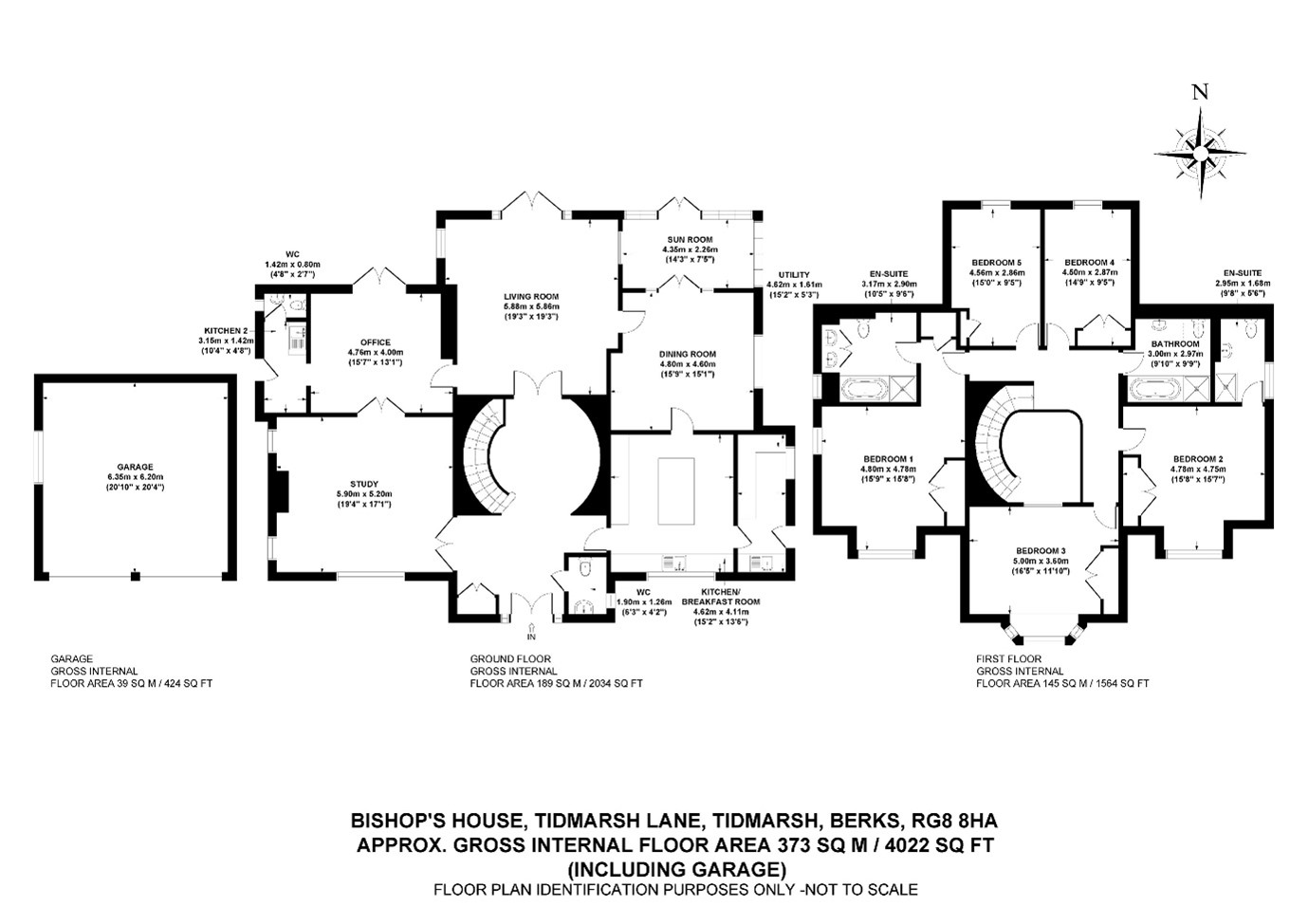
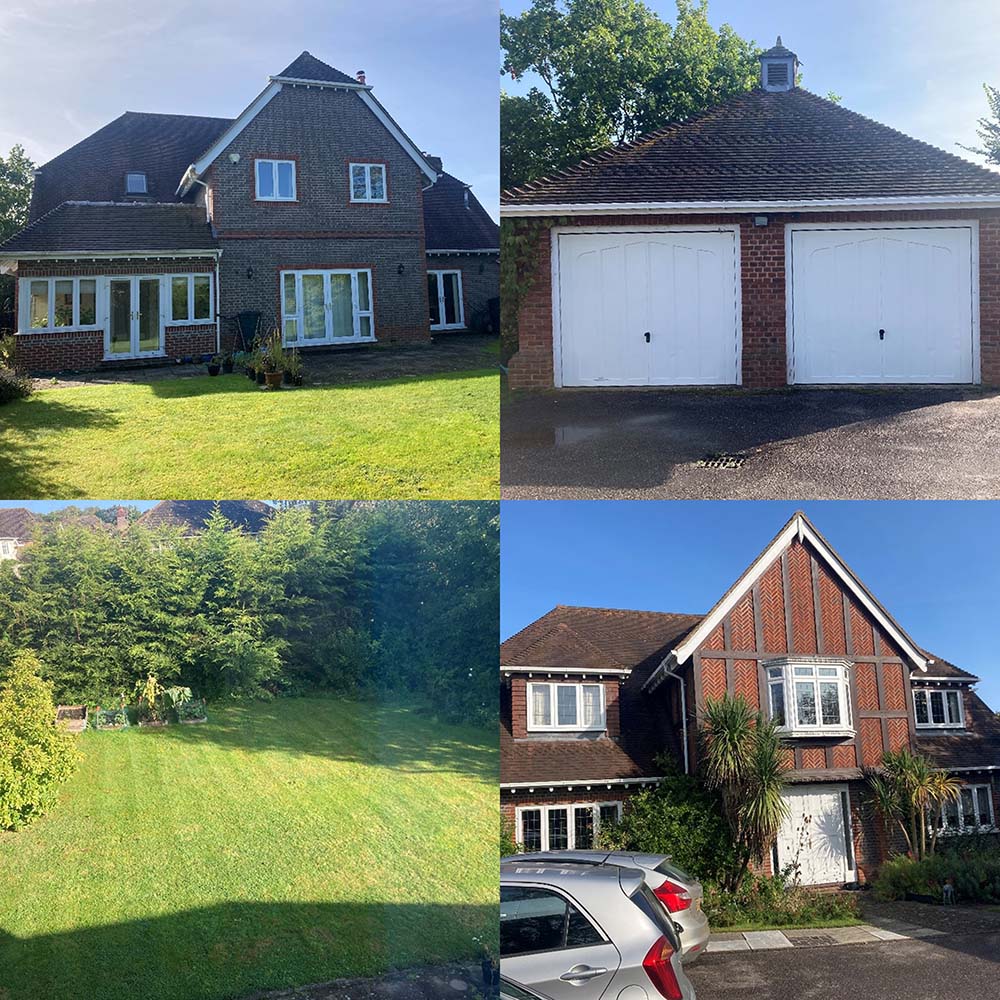
The house is a five-bedroomed, three-bathroom detached property, built in 1996.
The Bishop of Reading normally works from St Birinus House in Theale. However, the house has provision for a large study and ancillary space, with a separate entrance for visitors.
 Address:
Bishop’s House
Tidmarsh Lane
Tidmarsh
Reading
RG8 8HA
View the property on Google Maps.
House
- Five bedrooms
- Three bathrooms
- Two ensuite, one family bathroom
- Downstairs WC
- Living Room
- Dining Room
- Kitchen
- Utility Room
- Conservatory
Bishop’s study
- Bishop’s study
- Office
- Kitchenette
- Cloakroom
Exterior
- Double garage
- Rear garden laid to lawn with mature shrubs and trees
- Front of house is mainly car parking for cars with mature shrubs around perimeter and to the front of the house.